Ironman: Your fueling strategy on Race Day
From swim start to finish line
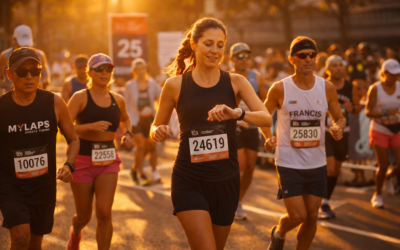
You have trained the fitness. You have practised the nutrition in long rides and brick sessions. You have loaded your carbohydrates and slept reasonably well. Now it is race morning, the gun goes off, and twelve or more hours of execution begin.
Race day nutrition is not a single decision. It is a sequence of decisions made across every discipline, every transition, and every aid station — under fatigue, under pressure, and often under conditions you did not fully anticipate. The athletes who get it right are the ones who treat those decisions as a rehearsed plan rather than an improvised response.
This guide maps the full nutritional arc of an Ironman race day, from the final pre-race meal through to the finish line. Each discipline presents different physiological demands, different gut tolerances, and different strategic priorities. Understanding them individually — and how they connect — is the difference between a race where nutrition works seamlessly in the background and one where it becomes the dominant story of the day.
Race day nutrition is not one decision. It is dozens of decisions made well, across twelve hours, under increasing fatigue.
The hours before the gun
Eat three hours before your start. This gives the stomach time to empty and reduces the risk of discomfort during the swim. Choose simple, tested foods that you have eaten before long training sessions: white bread with honey or jam, white rice, oats with banana. Nothing unfamiliar, nothing high in fat or fibre. Target around 500–600 calories at this meal, keeping the composition carbohydrate-centred and easy to digest.
Hydration starts at breakfast. Take 500 ml of a zero-carbohydrate electrolyte drink with your meal to begin the morning hydrated without overloading the gut with sugar before the race. Continue sipping an additional 200 ml of fluid in the hour that follows, then ease off. Stop drinking meaningfully around one hour before the start so the stomach is settled when the gun fires.
Caffeine deserves its own moment here. It is one of the most consistently effective legal performance aids in endurance sport, with strong evidence for improvements in both alertness and perceived effort. The key is timing: caffeine peaks in the bloodstream approximately 45 to 60 minutes after ingestion. Taking a caffeinated gel containing around 100 mg approximately 20 minutes before your wave start positions that peak precisely at the beginning of the bike leg, when you need it most. Plan additional caffeinated gels at roughly three-hour intervals through the race while not exceeding 400 mg total for the race. One important caveat: test your caffeine tolerance thoroughly in training before relying on it on race day. Caffeine sensitivity varies considerably between individuals, and a gut that reacts poorly to caffeine at race pace is not a problem you want to encounter for the first time at kilometre 80 of the bike.
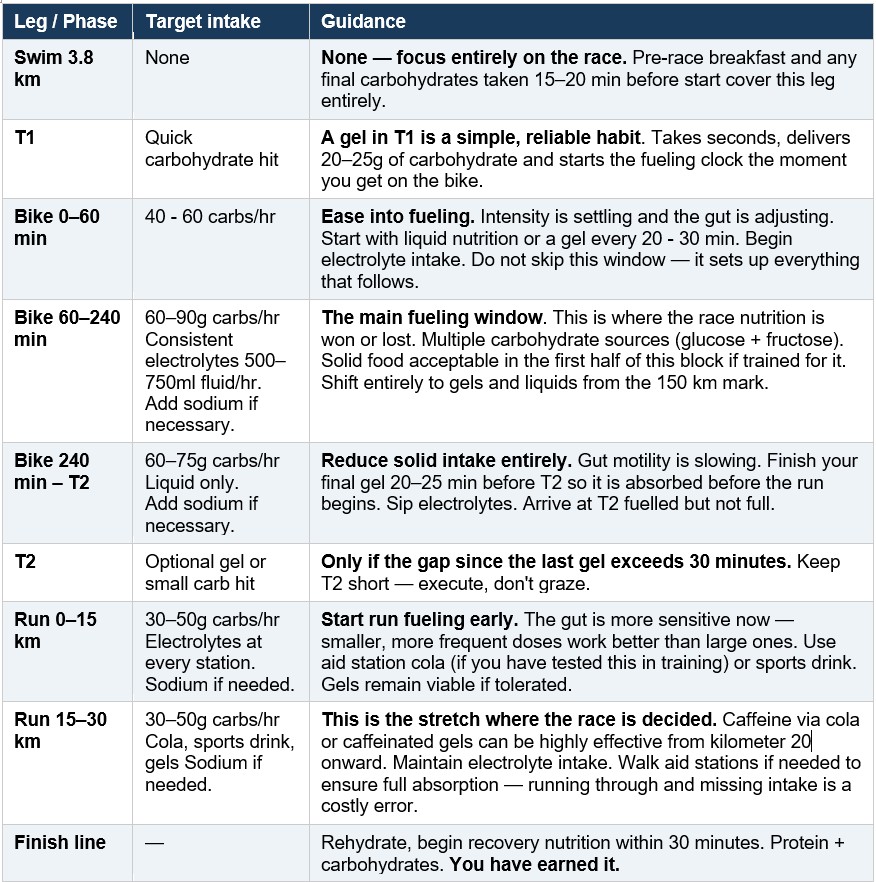
Race day nutrition phase by phase:
The swim: fuel-free, but not forgotten
The swim is the one discipline where active nutrition is neither possible nor necessary. The duration is short relative to total race time, intensity is moderate, and your pre-race nutrition fully covers the energy demands of 3.8 kilometres in the water.
What the swim does require is respect for what it does to the gut. Cold water, exertion, and swallowed water can all affect gastric comfort. Athletes who sprint the first 500 metres at a pace significantly above their sustainable effort will arrive at T1 with an already-stressed digestive system — one that will be less receptive to the large carbohydrate volumes needed on the bike. Pacing the swim sensibly is, indirectly, a nutrition decision.
T1 and the opening of the fuelling window
T1 is the moment the nutrition race begins in earnest. A gel taken in T1 — tucked into your helmet or kit bag for exactly this purpose — is one of the simplest and most consistently effective habits in long-course racing. It costs perhaps ten seconds, delivers an immediate carbohydrate dose, and starts the fuelling clock at the earliest possible moment.
The first 30 to 45 minutes on the bike represent a window of opportunity that many athletes waste. Intensity is relatively low as you settle into race pace, the gut is still fresh and receptive, and there is no accumulated fatigue to suppress absorption. This is precisely when fuelling is easiest and most effective. Athletes who delay taking anything until they feel they need it — typically 60 to 90 minutes into the bike — have already allowed a deficit to begin forming.
The bike leg is your refuelling window. The run is when you spend what you banked. Arrive at T2 with a full account.
The bike: where the nutrition race is decided
The bike occupies the majority of your race time and represents your primary opportunity to accumulate the carbohydrate intake needed to sustain the run. It is also the section where gut tolerance is highest, making it the right time to take in the bulk of your daily energy requirements.
Target 60 to 90 grams of carbohydrate per hour across the bike section, with athletes who have specifically trained their gut tolerance able to approach the higher end of that range. The key to unlocking higher absorption rates is using multiple carbohydrate sources — specifically glucose or maltodextrin combined with fructose, which are absorbed via different intestinal transporters. Most purpose-made sports nutrition products now reflect this dual-source approach; check the ingredient list of whatever you race with.
Solid food — bars, chews, real food — is viable and often psychologically welcome in the first half of the bike leg. As the ride progresses and intensity creeps upward, shift progressively toward gels and liquids. By the final 40 kilometres, the gut is beginning to prepare for the run and solid intake should stop entirely. Aim to take your last solid food no later than 120 kilometres into the bike.
Hydration runs parallel to carbohydrate intake but should be managed separately. Drink to thirst, adjusting for temperature and effort, however about 750 ml is a good target. Electrolytes — sodium in particular — should be a consistent presence throughout the bike leg, either via electrolyte capsules, tabs, or electrolyte-containing drinks. Sweat rate and sodium loss are highly individual; athletes who are heavy sweaters need to be particularly deliberate about sodium replacement.
T2 and the run transition
T2 is brief, but it is a nutritional decision point. If your last gel on the bike was more than 25 to 30 minutes ago, taking one in T2 makes sense. If you fuelled well and recently, skip it and keep T2 short. Arriving at the run start line with a recent carbohydrate dose active in the system is the goal.
One mistake worth naming: eating too much in T2 or in the opening kilometres of the run in an attempt to compensate for under-fuelling on the bike. The run gut is significantly more sensitive than the bike gut. Large doses of carbohydrate taken quickly once running are a reliable trigger for the kind of GI distress that can end a race. If you have under-fuelled on the bike, the damage is done — the correct response is careful, measured fuelling on the run, not an aggressive catch-up strategy.
The run: smaller doses, higher stakes
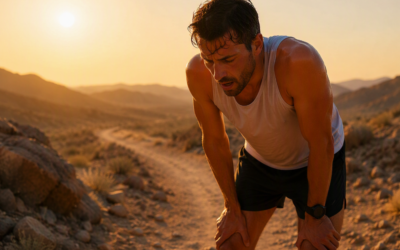
The marathon is where nutrition becomes most consequential and most challenging simultaneously. The vertical impact of running, combined with hours of accumulated fatigue and reduced gut blood flow, makes the run gut a far more volatile environment than the bike gut. Most athletes find their carbohydrate tolerance on the run is 20 to 40 percent lower than on the bike.
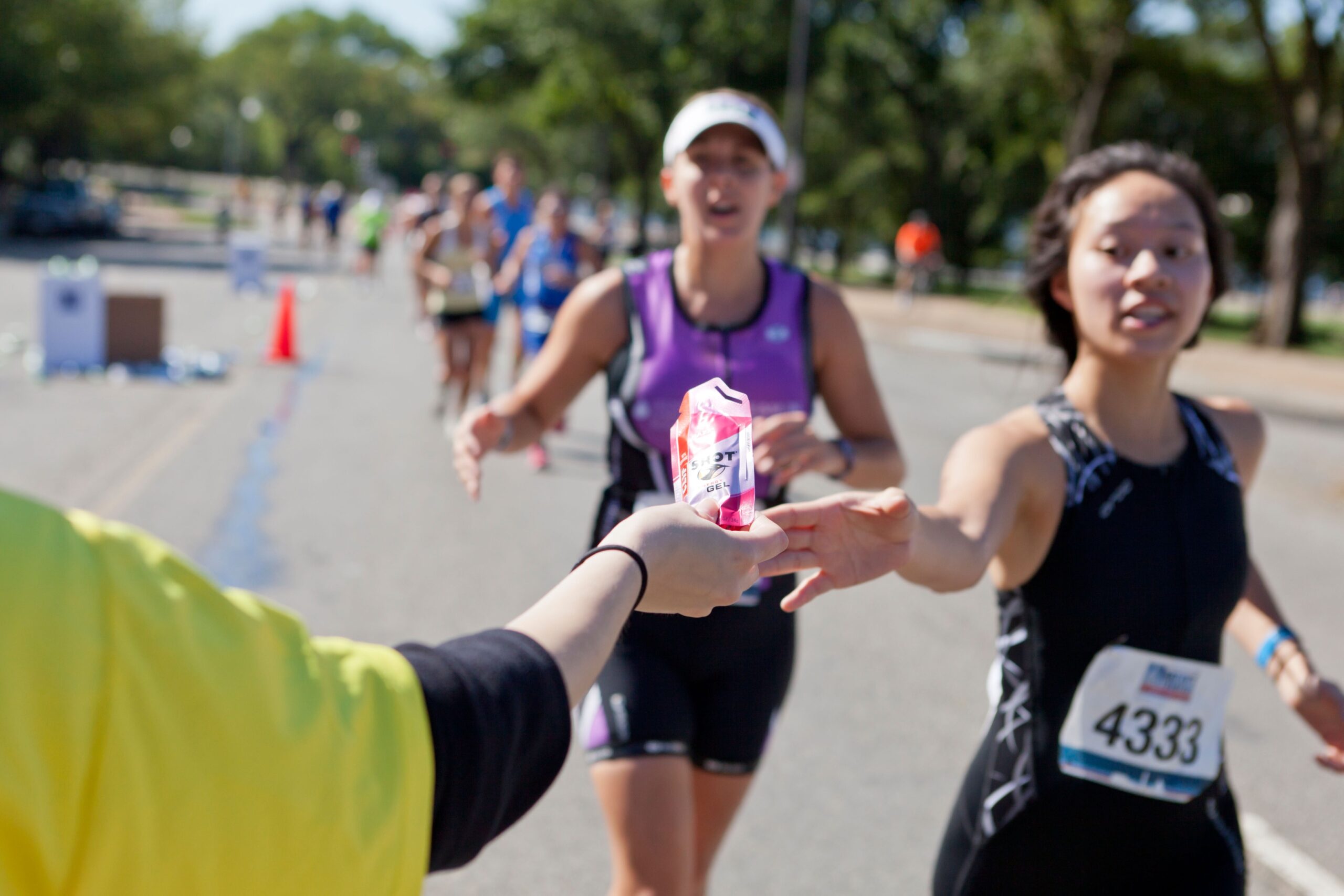
The strategy that works: start early, dose frequently, keep volumes small. Rather than taking a full gel every 45 minutes as you might on the bike, consider half a gel or a concentrated sip of sports drink at every aid station, or a full gel every 30 minutes. Consistency matters more than volume. Walking through aid stations — rather than attempting to drink or eat at full running pace — meaningfully improves absorption and is not the time loss it might appear to be.
Caffeine is legitimately useful in the first half of the run. Cola, available at most Ironman aid stations from around kilometre 20, provides a combination of simple sugars, sodium, and caffeine that many athletes find highly effective when fatigue and motivation are at their lowest. Caffeinated gels, if you have trained with them, serve the same purpose.
Five execution principles for race day
Everything above can be distilled into five principles that hold across all conditions and all race formats:
-
- Start fuelling before you feel you need to — hunger and fatigue are lagging indicators of a deficit that has already begun
- Never eat or drink anything on race day that you have not specifically trained with — the race course is not a testing ground
- Separate your hydration and carbohydrate strategies — managing both from one bottle leads to compromises on both
- Walk through aid stations on the run, it helps you absorb the nutrition — a ten-second walk is cheaper than a GI shutdown at kilometre 28
- Treat the final 10 kilometres of the run as a controlled descent — reduce intake, maintain electrolytes, finish what you started
The finish line is not the end of the plan
Recovery nutrition begins within 30 minutes of crossing the finish line, while the muscles are in their most receptive window for glycogen resynthesis and repair. A combination of carbohydrates and protein — a ratio of roughly 3:1 — initiates the recovery process most effectively. This is not a time for discipline or restraint; it is a time for deliberate refuelling.
An Ironman is a long day. The nutrition that makes it a good one starts the night before and does not end until after the finisher photo. Execute every phase of it with the same attention and preparation you brought to your training, and the race has every reason to go to plan. Click here for more general fuelling information.
Nutrition does not win you an Ironman. But poor nutrition loses more races than poor fitness ever has.
Referenzen (ausgewählt)
- Jeukendrup AE et al. Carbohydrate intake during exercise and performance: the role of multiple transportable carbohydrates. Sports Medicine / Current Opinion in Clinical Nutrition & Metabolic Care.
- Jeukendrup AE. Multiple transportable carbohydrates and their benefits. Gatorade Sports Science Institute Sports Science Exchange.
- Burke LM et al. Carbohydrates for training and competition. Journal of Sports Sciences.
- Science in Sport. Ironman nutrition guide. Science in Sport.