How TrainingPeaks Supports Endurance Athletes and Coaches in Training
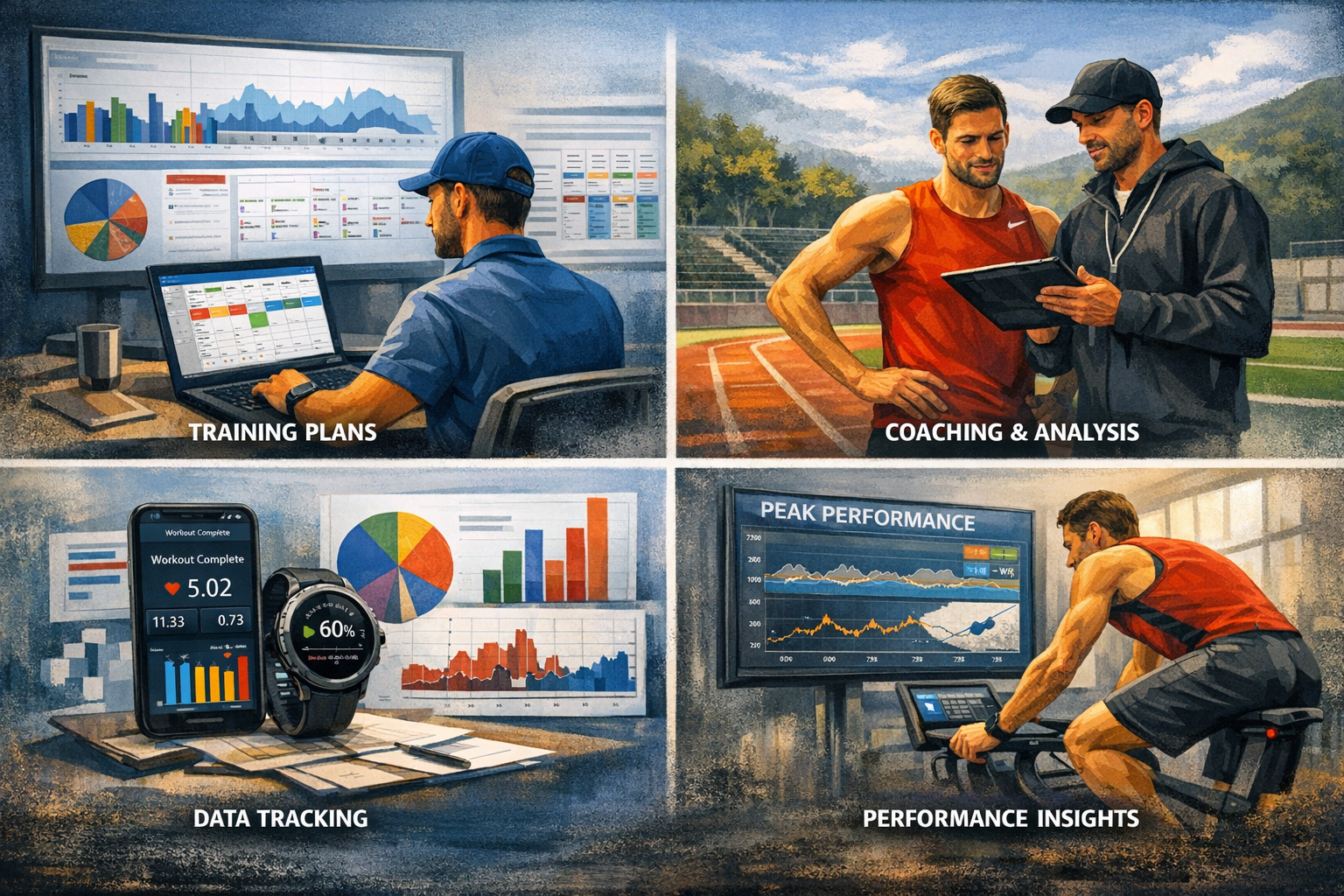
Successful endurance training today is no longer based solely on motivation and dedication. Structure, targeted training load management, and a close feedback loop between training and recovery are crucial to achieving progress while staying healthy. This is exactly where TrainingPeaks comes in—as a comprehensive platform that helps athletes and coaches plan, execute, analyze, and continuously optimize training.
What Is TrainingPeaks?
TrainingPeaks is an online platform for training planning and analysis for endurance athletes. It allows training sessions to be systematically recorded, performance data to be analyzed, and the training process to be structured over weeks and months. A particularly valuable feature is that TrainingPeaks serves as a central working platform between coach and athlete.
Athlete and coach work with the same data, the same metrics, and the same calendar. This creates transparency, trust, and a shared basis for decision-making—whether for individual workouts or long-term season planning.
Training Planning: The Coach Directs, the Athlete Executes
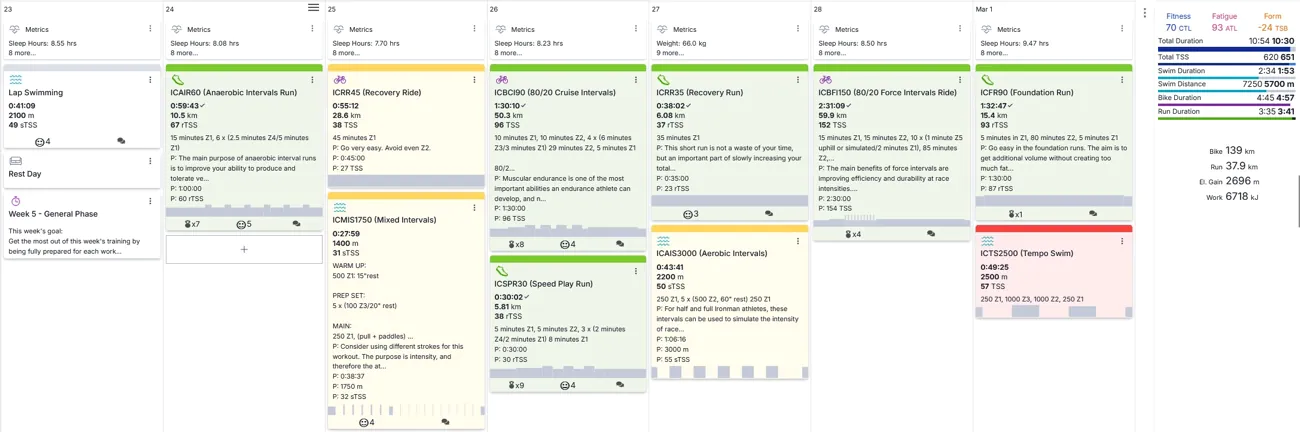
One major advantage of TrainingPeaks is the active role of the coach in the training process. The coach creates the training plan directly in TrainingPeaks and uploads the planned sessions straight to the athlete’s account. For the athlete, the workouts automatically appear in the calendar, including clear guidelines for duration, intensity, and the objective of each session.
As soon as the athlete completes a workout and uploads the data from their sports watch, the coach is automatically informed. The coach not only sees that the session was completed, but also how it was executed—including time, intensity, and training load.
This direct flow of information enables timely and targeted feedback. The coach can leave comments on the session, provide feedback on execution, or adjust the training plan at short notice. This rapid feedback loop is a key factor in achieving sustainable progress.
Automatic Data Collection as a Foundation
TrainingPeaks can be connected to most common sports watches and training platforms such as Zwift. Training data such as GPS data, heart rate, pace, or power are uploaded automatically. For athletes, this means minimal effort; for coaches, maximum transparency.
Continuous data collection creates a reliable foundation for training analysis. Load, intensity, and volume are recorded objectively and can be compared over long periods of time.
Training Stress Score (TSS): The Basis of Load Management
One of the most important metrics in TrainingPeaks is the Training Stress Score (TSS). TSS describes how demanding a workout was for the body, taking both duration and intensity into account. This makes TSS far more meaningful than simple distance or time metrics.
TSS is based on the athlete’s individual lactate threshold—for example, functional threshold power on the bike or threshold pace when running. One hour of training exactly at this threshold equals a TSS of 100. This allows different workouts to be objectively compared and sensibly planned over several weeks.
CTL, ATL, and TSB: Understanding Fitness, Fatigue, and Form
Based on daily TSS values, TrainingPeaks calculates additional key metrics for training management.
Chronic Training Load (CTL) describes long-term training load and is often used as a measure of fitness. A rising CTL indicates that the athlete is adapting to higher loads and building performance capacity.
Acute Training Load (ATL) represents short-term training load. It reacts sensitively to intensive training phases and is commonly used as an indicator of fatigue. High ATL values suggest that the body is currently under significant strain and needs adequate recovery.
The difference between CTL and ATL results in Training Stress Balance (TSB). TSB describes an athlete’s current form—that is, the balance between fitness and fatigue. A slightly negative TSB is typical during productive training phases, while a positive TSB is often associated with freshness and race readiness. For coaches, TSB is a central tool for precisely managing training load and determining the optimal timing for key competitions.
Performance Management Chart: Development at a Glance
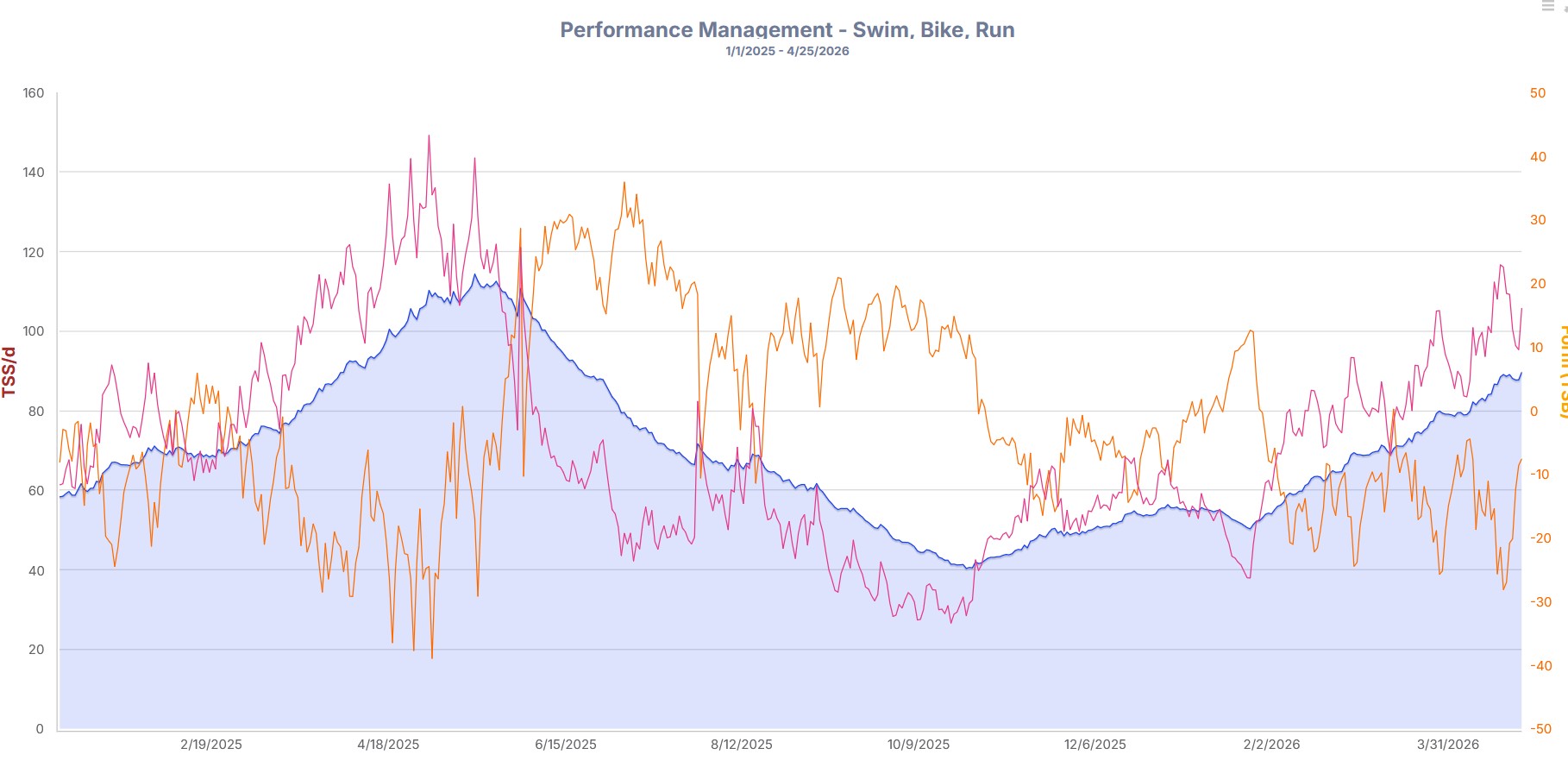
CTL, ATL, and TSB are displayed graphically in the so-called Performance Management Chart. This diagram shows the long-term development of fitness, fatigue, and form, making complex relationships easy to understand at a glance.
For coaches and athletes, the Performance Management Chart is a valuable tool for analyzing training phases, identifying load peaks, and making timely adjustments.
Why Ironcoach Prefers to Work with TrainingPeaks
Ironcoach mainly works with TrainingPeaks because the platform enables structured, data-driven, and at the same time highly personalized coaching. Training plans are integrated directly into the athlete’s account, completed sessions are automatically reported back, and analyzed promptly.
This close connection between planning, execution, and feedback allows ironcoach to tailor training individually to each athlete and to respond flexibly to load, fatigue, and everyday influences. TrainingPeaks is therefore not just an analysis tool, but a central component of the coaching process.
Conclusion: Structure, Feedback, and Sustainability in Training
TrainingPeaks connects athletes and coaches on a shared platform. Training planning, automatic data collection, objective metrics, and timely feedback work together seamlessly. This makes training predictable, transparent, and sustainably effective.
Endurance athletes benefit from a clearly guided training process, while coaches gain a powerful tool to manage training individually, data-driven, and successfully over the long term.