Endurance training is one of the strongest and at the same time most natural stimuli we can give our body. What looks simple from the outside—such as running, cycling, or swimming—triggers a cascade of adaptation processes inside the body. These affect almost every organ system: the heart, lungs, muscles, metabolism, hormonal system, and even the brain.
Central adaptations: heart, circulation, and lungs
What happens?
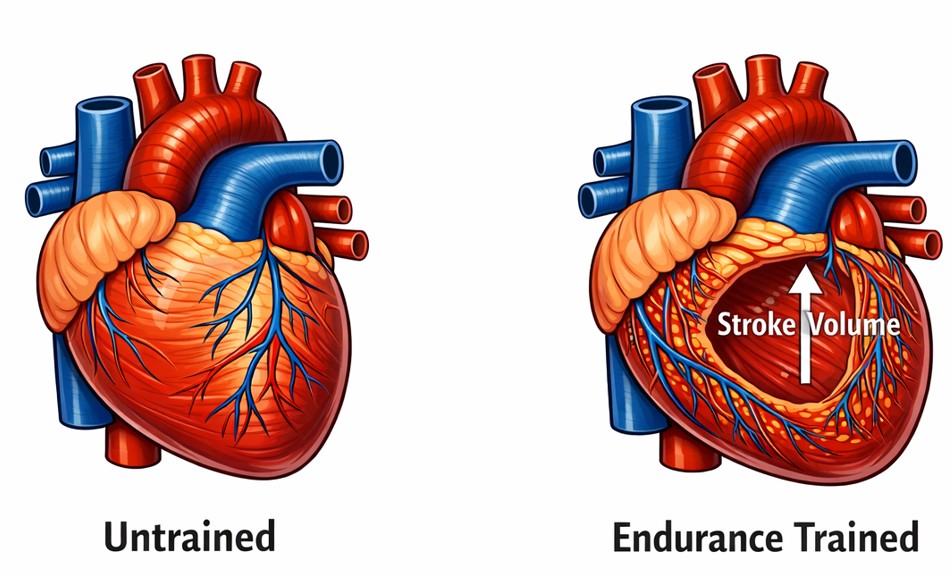
Regular endurance training leads to structural and functional improvements in the cardiovascular system:
- Enlargement of the left ventricle
- Increase in stroke volume
- Lower resting heart rate
- Increase in blood volume and oxygen transport capacity
- Improved vascular elasticity
Lungs & oxygen transport: efficiency instead of size
The lungs themselves hardly increase in size, yet their function improves markedly:
-
- More powerful respiratory muscles
- Better coordination between breathing and circulation
- More efficient gas exchange
The result is a higher maximal oxygen uptake (VO₂max), the key performance parameter of endurance capacity.
Peripheral adaptations: muscles & mitochondria
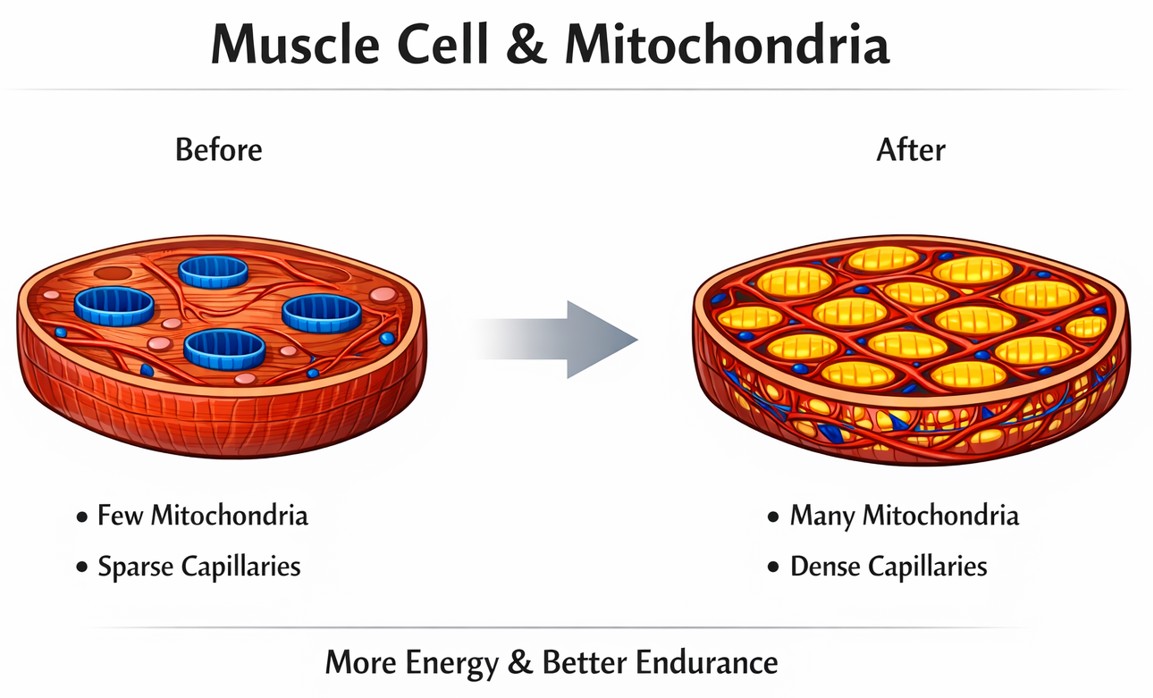
Endurance training acts deep inside the muscle cell:
-
- Increase in the number of mitochondria
- Higher activity of oxidative enzymes
- Improved capillarization
- Increased myoglobin content
Metabolism: more efficient energy utilization
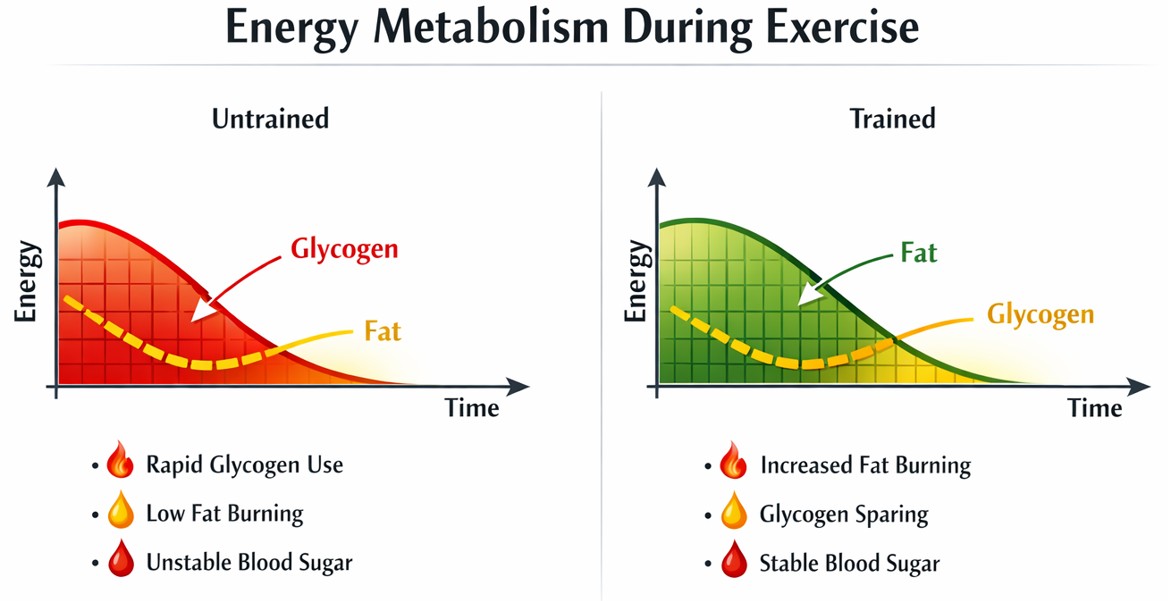
Regular endurance training makes metabolism more flexible:
- Earlier and stronger activation of fat oxidation
- Lower glycogen consumption
- Better blood sugar and lipid regulation
- Reduced systemic inflammation
Hormonal adaptations: balance instead of chronic stress
During exercise, adrenaline and noradrenaline increase to provide energy. In the long term, however, endurance training leads to:
-
- Improved insulin sensitivity
- More stable cortisol regulation
- More efficient stress response
- Better recovery
Brain & nervous system: movement as a neurostimulus
Endurance training promotes the release of neurotrophic factors, especially BDNF (Brain‑Derived Neurotrophic Factor). This substance supports:
-
- Neural plasticity
- Formation of new nerve cells (neurogenesis) in the hippocampus
- Improved cerebral blood flow
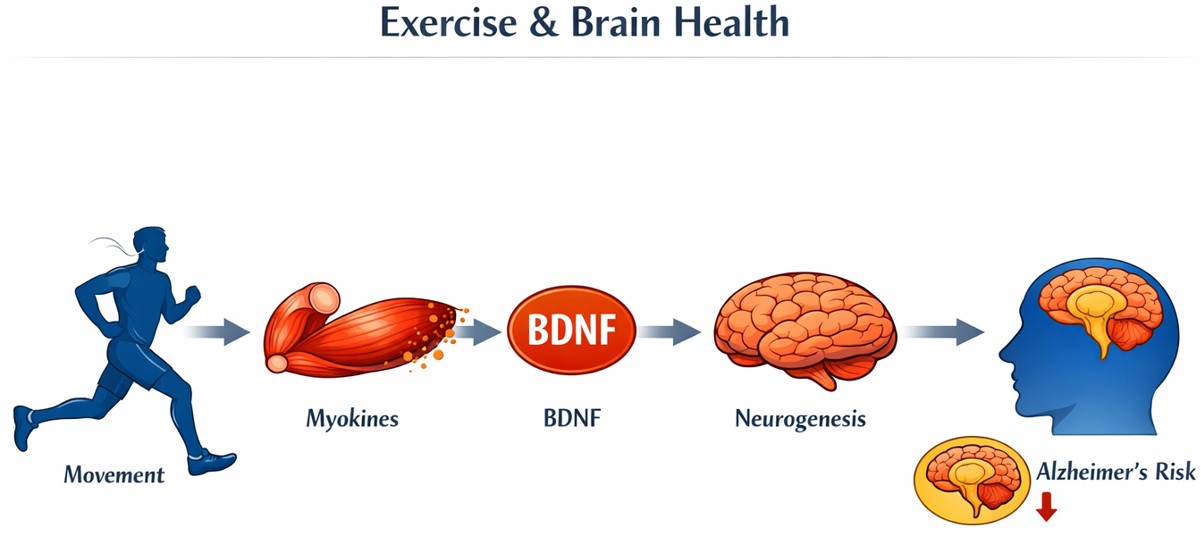
Endurance training and Alzheimer’s risk
Numerous long‑term studies show:
-
- Lower risk of Alzheimer’s disease and other dementias in physically active people
- Slower age‑related decline of the hippocampus
- Reduced neuroinflammatory processes
Mental health: training for mood
Endurance training improves mental health through:
- Endorphins and endocannabinoids
- Improved stress regulation
- Reduction of anxiety and depressive symptoms
Conclusion
Endurance training is not just “cardio.” It is a biological adaptation stimulus for the entire organism.
It improves performance, protects against chronic disease, strengthens the brain, and increases both physical and psychological health in the long term.
References (selected)
-
- Cardiovascular adaptations through endurance training
Janik M. et al. Adaptive Changes in Endurance Athletes: A Review of Molecular, Echocardiographic and Electrocardiographic Findings. International Journal of Molecular Sciences, 2025. - Muscular adaptations & mitochondrial biogenesis
Hughes D.C. et al. Adaptations to Endurance and Strength Training. Cold Spring Harbor Perspectives in Medicine, 2018. - Insulin sensitivity and metabolic health through exercise
Bird S.R. & Hawley J.A. Update on the effects of physical activity on insulin sensitivity in humans. BMJ Open Sport & Exercise Medicine, 2017. - BDNF, neurogenesis, and cognitive effects of endurance training
Liu P.Z. & Nusslock R. Exercise‑mediated neurogenesis in the hippocampus via BDNF. Frontiers in Neuroscience, 2018. - Endurance training and Alzheimer’s risk (systematic evidence)
Iso‑Markku P. et al. Physical activity as a protective factor for dementia and Alzheimer’s disease: systematic review and meta‑analysis. British Journal of Sports Medicine, 2022. - Physical activity as a modifiable risk factor in Alzheimer’s disease
Yau W.Y.W. et al. Physical activity as a modifiable risk factor in preclinical Alzheimer’s disease. Nature Medicine, 2025.
- Cardiovascular adaptations through endurance training