Swim Technique: The Fundamentals that Move you Forward in an Efficient and Relaxed Way
When people think about swimming faster, they often imagine stronger arms, harder kicking, or brutal interval sessions. In reality, speed and endurance in the water come far more from how you move than from how hard you try. Good swim technique reduces drag, conserves energy, and allows your strength to translate into forward motion. Without it, even the fittest athletes struggle.
This article breaks down the essential elements of efficient freestyle technique: breathing, head position, body position and alignment, posture, and propulsion. Mastering these fundamentals will help you swim faster, longer, and with far less effort.
Breathing Technique in Swimming: Stay Relaxed and Efficient
Correct breathing is the foundation of efficient swim technique. Poor breathing disrupts body position, rhythm, and alignment, often leading to excess drag and early fatigue. When breathing is uncontrolled or tense, even strong swimmers struggle to move smoothly through the water.
A common mistake is holding the breath underwater. Breath‑holding causes carbon dioxide (CO₂) to build up in the blood, even when oxygen levels are adequate. Elevated CO₂ increases feelings of urgency, stress, and anxiety, making it difficult to stay relaxed. As tension rises, swimmers often rush their stroke, lift the head to breathe, and lose body alignment.
Efficient swimming requires continuous exhalation underwater, allowing CO₂ to escape so each inhale feels calm and effortless. Breathing should support relaxation, not interrupt the stroke.
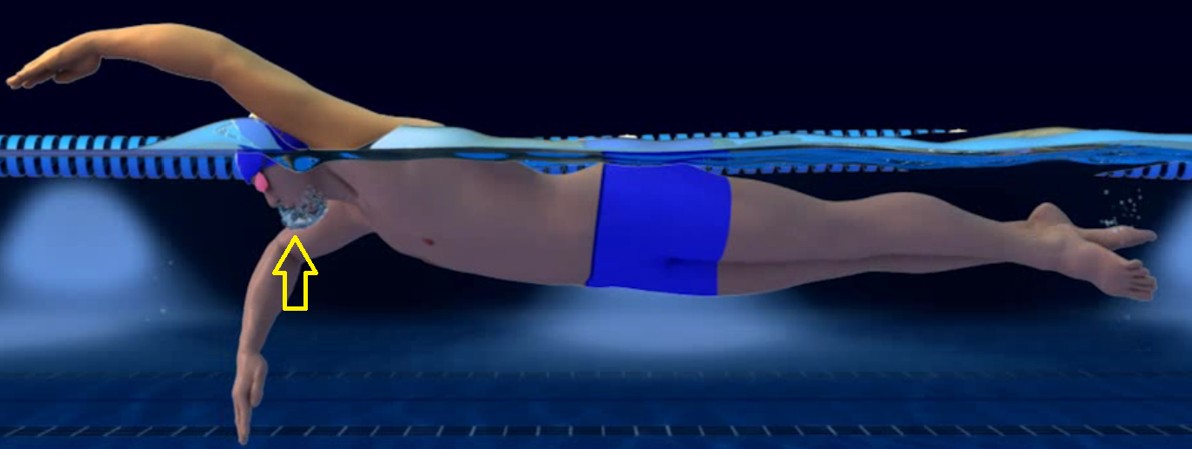
Ideally, swimmers should practice bilateral breathing, alternating sides. Bilateral breathing promotes balanced stroke mechanics, better rotation, and reduces the risk of overuse injuries from one‑sided breathing patterns.
Key principles of effective breathing include:
-
- Steady exhalation underwater
- Quick, controlled inhalation
- Breathing with body rotation, not head lift
When breathing is relaxed and well‑timed, the entire stroke becomes smoother, more efficient, and easier to sustain over distance.
Head Position: Where the Head Goes, the Body Follows
Head position has an outsized impact on swim efficiency. Because the head is relatively heavy, small changes in angle can throw the entire body out of alignment.
The ideal head position is neutral:
Eyes looking down and slightly forward
-
- Neck long and relaxed
- Head still, with rotation coming from the torso
When the head lifts, even slightly, the hips and legs sink. When the chin tucks too far down, the shoulders stiffen and rotation becomes limited. A stable head acts as an anchor point for the rest of the body, allowing smoother rotation and better balance.
During breathing, the head should rotate just enough to clear the mouth. One goggle in the water, one out is a useful cue. The waterline should sit around the middle of the face. Any more movement than this is wasted energy that increases drag.
Body Position: Horizontal Is Fast
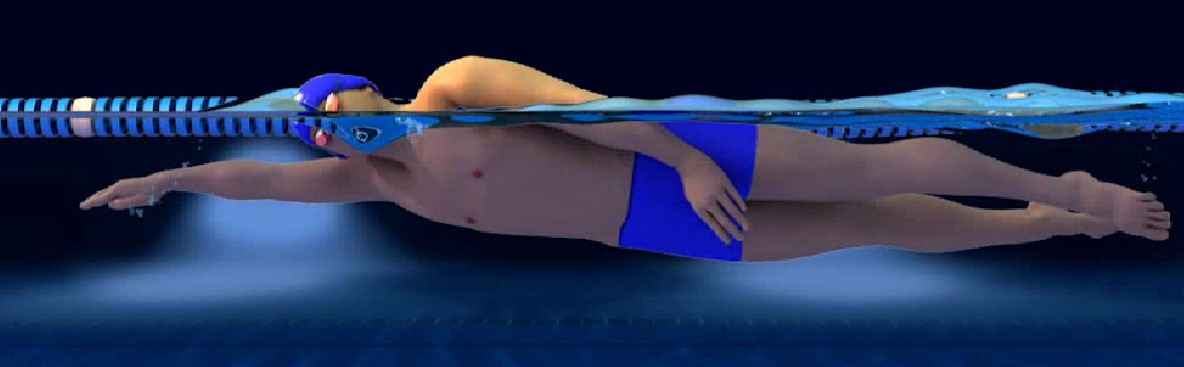
Efficient swimmers stay long and horizontal in the water. The more horizontal your body, the less resistance you face, and the less energy you need to maintain speed.
Many swimmers swim “uphill,” with the chest pressing downward and the legs trailing low. This often comes from poor breathing mechanics, weak core engagement, or over‑kicking without proper balance.
To improve body position:
-
- Engage the core gently, as if balancing on a tightrope
- Press the chest slightly downward while keeping the hips high
- Lengthen the body from fingertips to toes
Think of swimming through the water, not on top of it. A horizontal body shape allows your pull to drive you forward instead of upward, making every stroke more effective.
Posture and Alignment: Swimming Straight and Stable
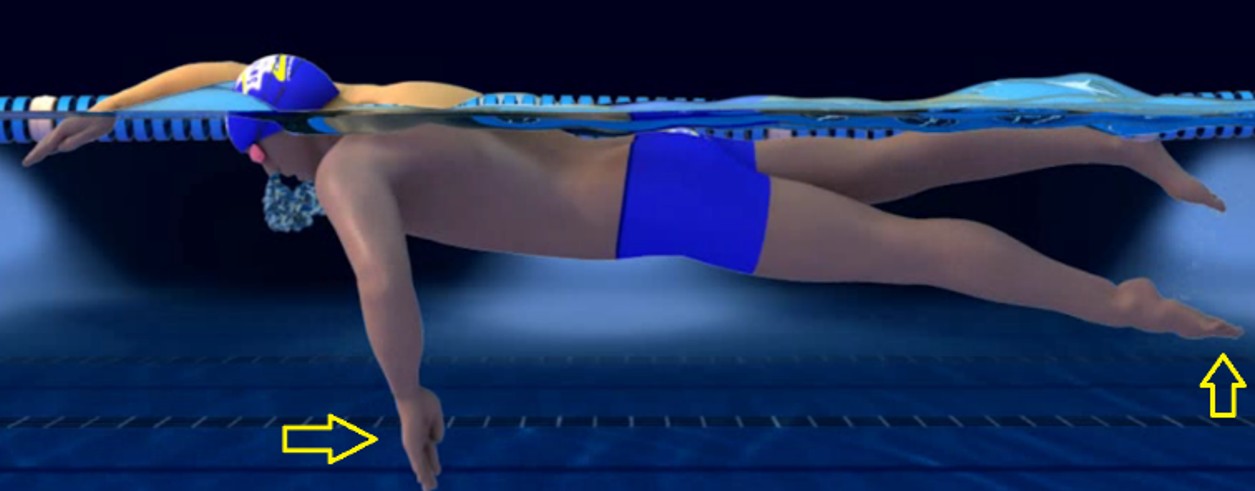
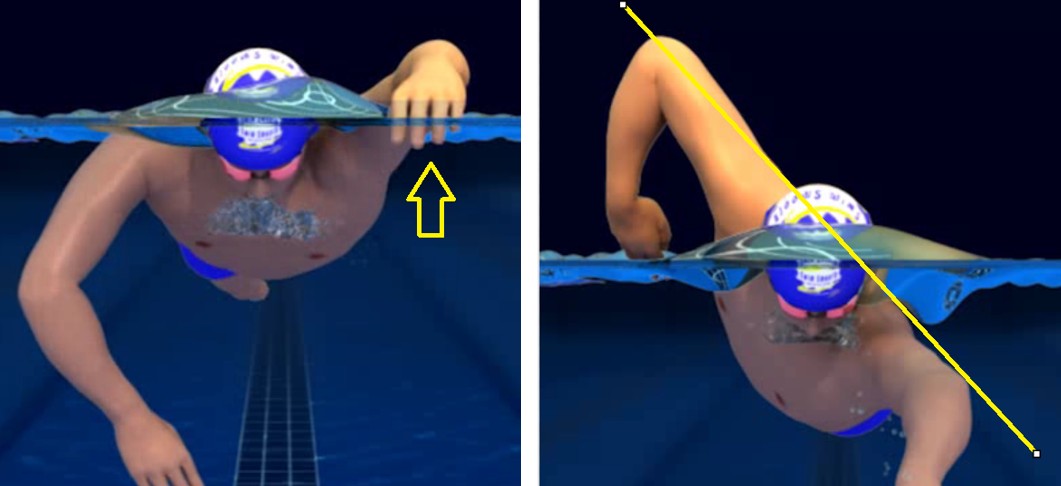
Good posture in swimming means maintaining alignment from head to hips to feet while rotating smoothly around the body’s long axis. This alignment reduces side‑to‑side movement, which is pure wasted effort.
Common alignment issues include:
-
- Crossing the midline during hand entry
- Excessive fishtailing of the legs
- Over‑rotating to one side
Each stroke should extend forward in line with the shoulder, not across the center of the body. Rotation should come from the hips and torso working together, rather than isolated shoulder movement.
Strong posture creates a stable platform for propulsion. Without it, even a powerful pull leaks energy in multiple directions instead of sending you forward.
Propulsion: Why the Pull Matters Most
One of the biggest misconceptions in swimming is the role of the kick. While kicking helps with balance and timing, it contributes far less to forward propulsion than most swimmers believe.
In freestyle, around 90% of propulsion comes from the pull, not the kick.
Kicking hard is often a waste of energy, especially for distance swimmers and triathletes. The legs are large oxygen‑hungry muscles, and aggressive kicking sends heart rate and oxygen demand through the roof with minimal speed gain.
Instead, focus on:
-
- A relaxed, compact kick
- Kicking from the hips, not the knees
- Using the kick to stabilize body position and support rotation
The arms, by contrast, are your primary engine. Effective propulsion comes from a high‑quality pull:
-
- Enter the water smoothly
- Establish an early catch
- Pull back with the forearm and hand acting as a paddle
- Finish the stroke past the hips
The goal is not brute force but controlled power applied in the right direction. A well‑timed pull connected to body rotation allows you to generate speed efficiently and sustainably.
Bringing It All Together
Swim technique is a system. Breathing affects head position, head position affects body alignment, body alignment affects propulsion. You cannot fix one area in isolation and expect everything else to fall into place.
The good news is that improvements in technique often bring immediate results. Swimmers frequently report swimming faster at a lower heart rate after focusing on fundamentals rather than effort.
If you want to swim better:
-
- Prioritize correct, relaxed breathing
- Keep the head neutral and stable
- Maintain a long, horizontal body position
- Swim with posture and alignment
- Invest your energy in the pull, not a frantic kick
Swimming rewards precision more than aggression. When technique improves, speed becomes a consequence—not a struggle.