
Swimrun
Swim. Run. Repeat.
Combine Open-Water Swimming and Trail-Running in one Race

Book a Free 20 Minute Call
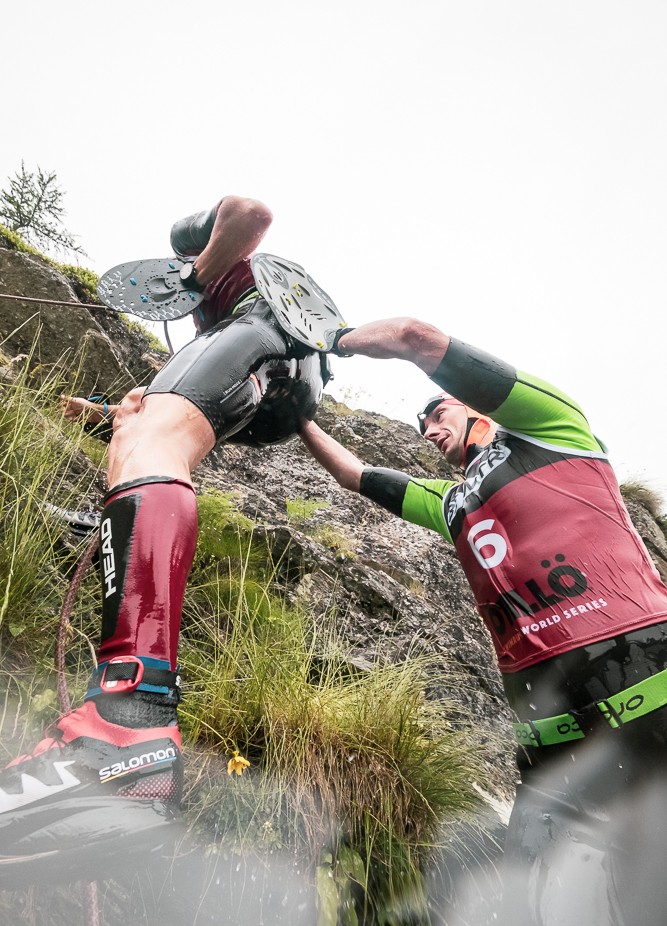
Swimrun races such as ÖTILLÖ Swimrun challenge you to redefine your limits through the constant transition between open water swimming and demanding trail running.
Whether you want to master the unique demands of swimming in a wetsuit and trail shoes, build the confidence to navigate safely in open water, or develop the endurance and skills needed to complete an ÖTILLÖ Swimrun, our plans are individually tailored to your goals, your fitness level, and your schedule.
Built on a proven polarised training methodology, your program balances purposeful low-intensity volume with precisely timed high-intensity work to maximize adaptation, speed, and durability. And to keep your momentum high, you also get weekly personalized feedback and guidance, so you’re always supported, motivated, and moving forward.
All training plans are delivered through your free or premium TrainingPeaks account. They are normally heart-rate based but for the bike, they are also available power-based. Each workout automatically syncs to your smartwatch or training platform (Garmin, Polar, Suunto, Zwift, Wahoo, etc.), where you’ll be guided in real time to stay in the correct zones. Once completed, your session uploads back to TrainingPeaks for coach review and feedback—making your training more fun, structured, and effective
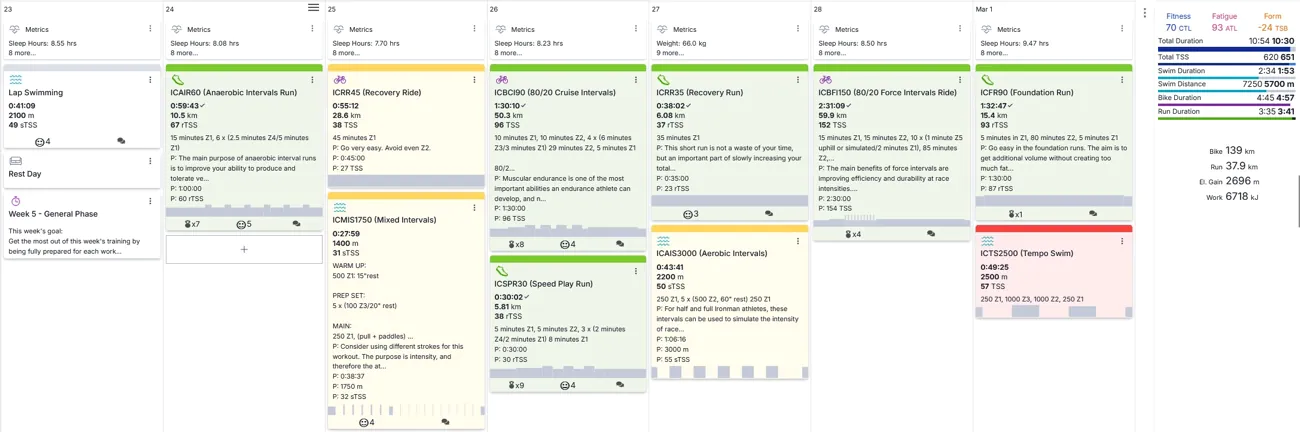
Here is an example of a weekly plan on TrainingPeaks: The green sessions were completed as planned, the yellow ones were either under- or over-trained, and the red ones were missed. TrainingPeaks then shows the deviations from the plan for each discipline in the weekly summary.
Ötilö Swimrun
12 Weeks
- Evaluation of the athlete questionnaire and definition of goals
- Assessment of the current fitness level and definition of training zones
- Learning and practicing Swimrun technique
- Detailed, individualized training plan
- Option: 1:1 video analysis (+ CHF 75)
- Training analysis and feedback via video conference, 20 minutes per week
CHF 390
Individual Coaching
2 x 1 Stunde
- Endurance
- Technique
- Tactic
- Nutrition
- Recovery
- etc
CHF 170
Trainingpeaks
Sample Training Plans
Ask for different levels
Before you begin this intermediate Swimrun plan, you should already be swimming 3–4 times per week, be able to swim comfortably for about 40 minutes continuously, and already have good technique. You should also be able to jog easily over uneven terrain for 60 minutes.
Key Focus Areas
- Video analysis to improve technique
- Building a solid aerobic base
- Learning specific Swimrun techniques
Average Weekly Structure
- 3–4 swim sessions per week
- 2 brick sessions (a run directly after swimming)
- 2–3 running sessions
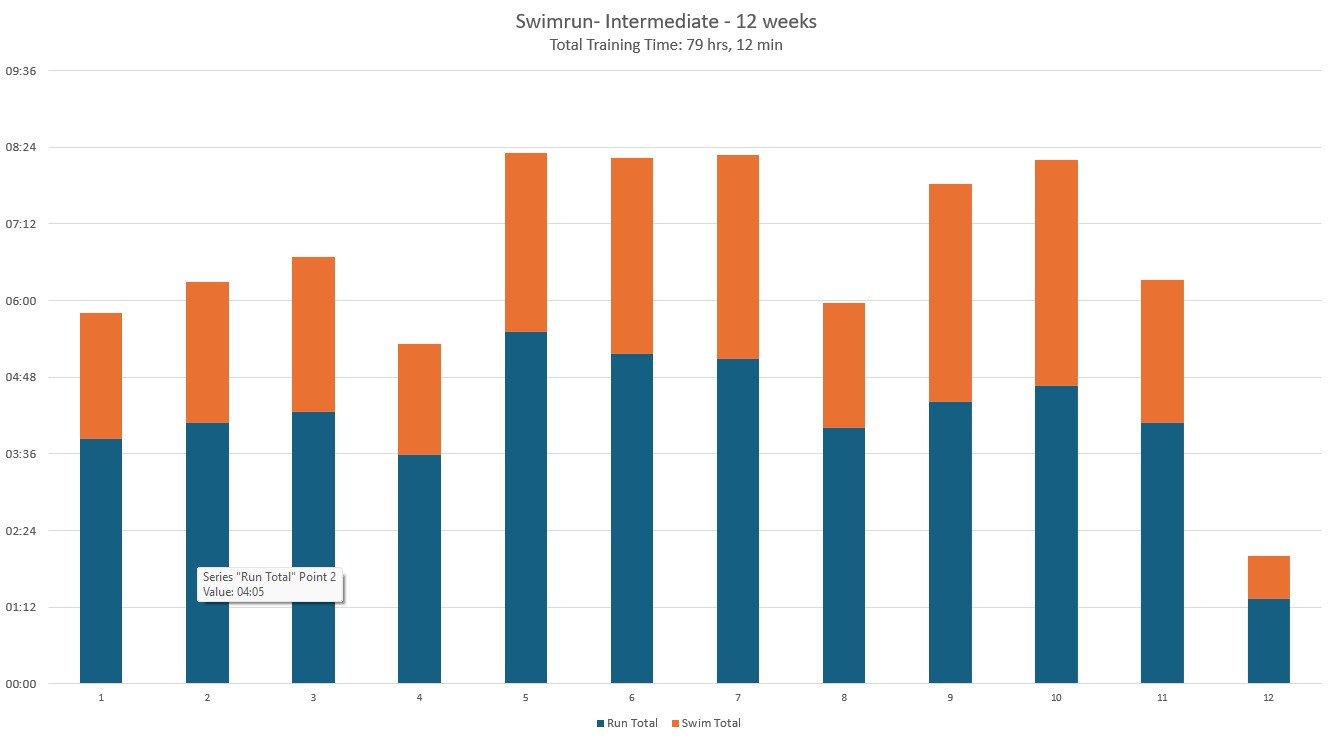
- Highest weekly volume: approximately 8 hours
- Longest session: 3 km
Why Polarised Training Works
The Science Behind the Method
Most recreational endurance athletes train at the wrong intensities — making easy days too hard and hard days not hard enough. The polarised method corrects this with a seven-zone framework built on decades of research.
The Polarised Principle
80% of training belongs in Zones 1 and 2 — below the first ventilatory threshold (VT1), where breathing is controlled and lactate stays near resting levels. The remaining 20% targets Zones 5 and 6, above the second ventilatory threshold (VT2). The moderate middle is deliberately minimized.
Why Avoid the Middle?
Zones 3 and 4 sit in the “wasteland” of training intensity — too fatiguing for high volume, yet not intense enough to drive meaningful adaptation. Athletes who train here accumulate chronic fatigue without maximising the benefits of either end of the spectrum.
What Each End Delivers
Low-intensity work drives mitochondrial biogenesis, stroke volume, plasma volume, and capillary density — the structural foundations of endurance. Fast recovery allows the training volumes needed for these adaptations to compound.
High-intensity work in Zones 5 and 6 recruits fast-twitch fibres, elevates VO2max, and improves lactate clearance — adaptations that cannot be replicated at lower intensities.
The 80/20 model is the closest thing exercise science has produced to an evidence-based optimum for endurance development.
How can I get you in shape?
VO₂max
VO₂max is the maximum amount of oxygen your body can take in and use per minute during intense exercise, and it is one of the best indicators of endurance and cardiovascular fitness.
What is FTP
FTP (Functional Threshold Power) is the maximum average power you can sustain steadily while cycling for about 45 minutes, comparable to the second lactate threshold.