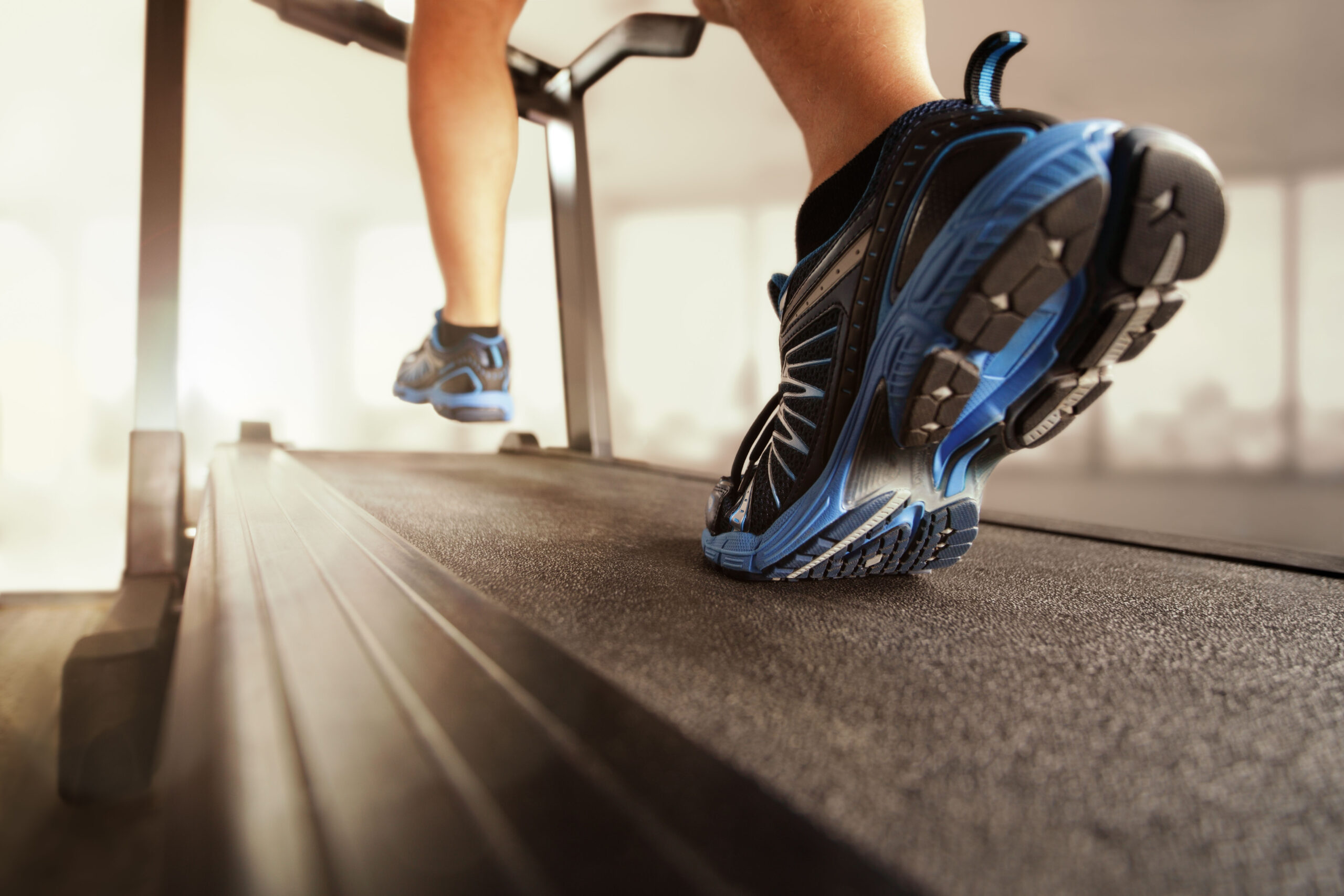
Running on Soft Surfaces: Why Softer Doesn’t Automatically Mean Easier
Grass, trails, sand, and treadmills all feel gentler than asphalt or concrete. Many runners assume that choosing a softer surface automatically means less stress on the body and a lower injury risk. The idea seems intuitive: softer ground should absorb more impact.
But running isn’t a simple impact problem. It’s an active, highly controlled movement, and when the surface changes, the body changes too. In many cases, those adaptations cancel out the very cushioning runners think they’re gaining.
Understanding how the body responds to softer surfaces helps explain why they are not necessarily easier on joints—and why smart runners tend to use a mix of surfaces rather than relying on just one.
Your Body Cancels Out Cushioning
When you run, your legs behave like springs. Muscles, tendons, and joints work together to absorb force when your foot hits the ground and release energy to propel you forward.
When the surface becomes softer, the body doesn’t relax and let the ground do the work. Instead, the nervous system senses instability and responds by stiffening the leg. This happens automatically and quickly, often within just a few steps.
The result is that overall running mechanics—such as how much your body moves up and down or how long your foot stays on the ground—remain surprisingly similar across different surfaces. In practice, the surface compresses more, but your legs tense more, and much of the supposed cushioning benefit disappears.
Softer Surfaces Shift the Workload
Soft surfaces don’t just affect impact. They also affect how efficiently you move forward.
Firm surfaces push back against your foot and help redirect energy into forward motion. Softer or yielding surfaces deform under load and absorb part of that energy instead of returning it. To keep running at the same speed, your muscles must make up the difference.
Sand is the clearest example. When you run on sand, part of your effort goes into moving the sand itself and stabilizing your foot as it sinks and shifts. Less energy comes back to help push you forward, so your muscles work harder every step.
The same concept applies in subtler ways to other compliant or moving surfaces.
Higher Energy Cost Means More Muscle Work
Running efficiency matters. When surfaces absorb more energy, the body relies less on elastic recoil from tendons and more on active muscle contraction.
That’s why running on sand—or long stretches on very soft or unstable terrain—feels so demanding even at slow speeds. Oxygen consumption and energy use increase because muscles are working longer and harder to stabilize joints and generate forward motion.
While this can be useful for conditioning, it also means greater muscular fatigue. As muscles tire, they become less effective at protecting joints and bones, and stress may shift to tissues such as the Achilles tendon, plantar fascia, or shins.
Calves, Achilles, and Surface Choice
Soft surfaces are often assumed to be safer for the Achilles tendon, but the picture is more nuanced.
When running on a treadmill, the calf muscles tend to work slightly harder than during outdoor running, which increases the load passing through the Achilles tendon. Running on sand amplifies this effect even further, as the unstable surface and loss of energy return force the muscles to do more work with each step.
This doesn’t mean treadmills or sand are “bad,” but they do impose a different workload. Problems often arise when runners sharply increase volume on these surfaces without giving the calves and Achilles time to adapt.
What About Hard Surfaces and Bone Injuries?
Hard surfaces like concrete tend to produce higher measured impact accelerations than grass or track surfaces. This has led to the widespread belief that hard ground causes more stress fractures.
In reality, bone stress injuries are not driven simply by how hard the surface feels. What matters more is how quickly force is applied, how often it’s applied, and whether the bone has time to adapt.
Bones are loaded not only by impact with the ground but also by muscle contractions. When muscles pull on bones to stabilize joints or push the body forward, they create internal forces that can be just as significant as impact forces. On softer surfaces, where muscles often work harder, internal bone loading can remain high even if impact feels lower.
As with many running injuries, training progression matters more than surface type alone.
Speed Amplifies Everything
Running faster increases stress regardless of surface. As speed increases, forces per step rise, muscles must generate more power, and tissues experience higher peak loading.
Fast running is not inherently dangerous—but doing a lot of it, especially while fatigued or on unfamiliar surfaces, increases injury risk. Surface choice does not override the basic rule that intensity matters.
Is It Smart to Mix Surfaces?
For most runners, yes.
Different surfaces challenge different tissues. Firm ground tends to emphasize impact tolerance and bone loading rates. Softer or more unstable ground places higher demands on muscles and stabilizers.
Using a mix of surfaces helps distribute stress across the body rather than concentrating it in the same tissues day after day. The key is to treat surface changes as real training variables, not free recovery tools.
Key Injury Prevention Tips
- Treat surface changes like training changes
Switching from roads to sand, trails, or treadmill running increases muscular demand. Reduce volume or pace at first and progress gradually. - Build calf and foot strength
Strong calves and foot muscles better tolerate soft‑surface demands and help protect the Achilles tendon. - Don’t confuse comfort with low load
Softer surfaces may feel easier, but higher breathing rate or burning calves are signs of increased internal stress. - Match speed to surface
Keep high‑speed running on stable, predictable surfaces where mechanics are repeatable. - Use variety strategically
Most mileage on consistent surfaces, with controlled exposure to softer terrain, tends to produce the best balance of performance and durability.
The Bottom Line
Soft surfaces often feel forgiving, but the body adapts by stiffening and working harder. Energy loss, altered propulsion, and increased muscle demand mean that softer does not automatically mean easier—or safer.
Hard surfaces aren’t inherently harmful, and soft surfaces aren’t magical injury shields. The smartest approach is thoughtful variety, gradual progression, and an understanding that every surface shifts stress in different ways.
Running well isn’t about finding the perfect surface. It’s about managing load intelligently across all of them.
Key Sources
- Ferris, Farley & Louie – Running in the real world: adjusting leg stiffness for different surfaces
- Farley & Ferris – Interaction of leg stiffness and surface stiffness
- Lejeune, Willems & Heglund – Mechanics and energetics of human locomotion on sand
- Zamparo et al. – Energy cost of walking and running on sand
- Van Hooren et al. – Biomechanical comparison of treadmill and overground running
- Van der Worp et al. – Loading rate and stress fracture risk
- Milgrom et al. – Bone loading, speed, and stress injury risk